

The Supreme Court ruling in Sheetz v. El Dorado County clarified that California impact fees must comply with the Takings Clause to protect property rights, even when enacted by a legislature. This decision mandates that development fees satisfy the Nollan/Dolan test; consequently, local governments must prove an essential nexus and rough proportionality for all mandatory exactions.
For decades, California property owners and small business developers have faced a daunting reality, which is the imposition of exorbitant, non-negotiable impact fees that often serve as a barrier to entry for even modest projects. These legislatively mandated costs were long shielded by state courts, leaving owners with little recourse against local government overreach. However, the Supreme Court’s landmark ruling in Sheetz v. El Dorado County has fundamentally rebalanced the scales of justice. By dismantling the so-called legislative exception, the Court has ensured that all development exactions must now meet constitutional scrutiny under the Nollan and Dolan nexus and proportionality standards. This article explores how this decision empowers owners to challenge unfair fees, the practical implications for economic freedom in California, and how the California Civil Defense Institute remains at the forefront of protecting your property rights against abusive permitting practices.
The Sheetz v. El Dorado County Landmark Ruling: A Turning Point for California Property Owners

George Sheetz simply wanted to build a modest, prefabricated home on his lot in El Dorado County. However, the path to a building permit was blocked by a $23,420 traffic impact fee. This was not a nominal administrative cost; it was a substantial financial burden imposed regardless of the actual traffic his specific project would generate. Sheetz paid the fee under protest, sparking a legal battle that reached the highest court in the land and reshaped the landscape of property rights in the Golden State.
The central conflict involved a long-standing legal dodge used by local governments. El Dorado County contended that they did not need to justify the fee specifically to the Sheetz project because the rate was part of a legislatively mandated fee schedule. From their perspective, if the Board of Supervisors passed the fee as a general policy, it was immune from the heightened scrutiny usually applied to government exactions. This stood in direct opposition to the Fifth Amendment’s Takings Clause, which prohibits the government from taking private property for public use without just compensation.
At the California Civil Defense Institute, we view this case as a vital win for economic freedom and government accountability. For decades, California property owners were forced to shoulder the costs of public infrastructure that should have been funded by the community at large. This landmark ruling on California impact fees Supreme Court Sheetz property rights ensures that the Constitution protects citizens regardless of which branch of government seeks to infringe upon their liberties. Through our strategic litigation against government agencies, we remain committed to ensuring that local municipalities can no longer use the permit process as a tool for unconstitutional revenue generation.
The End of the Legislative Exception: Why California Courts Can No Longer Protect Unfair Fees
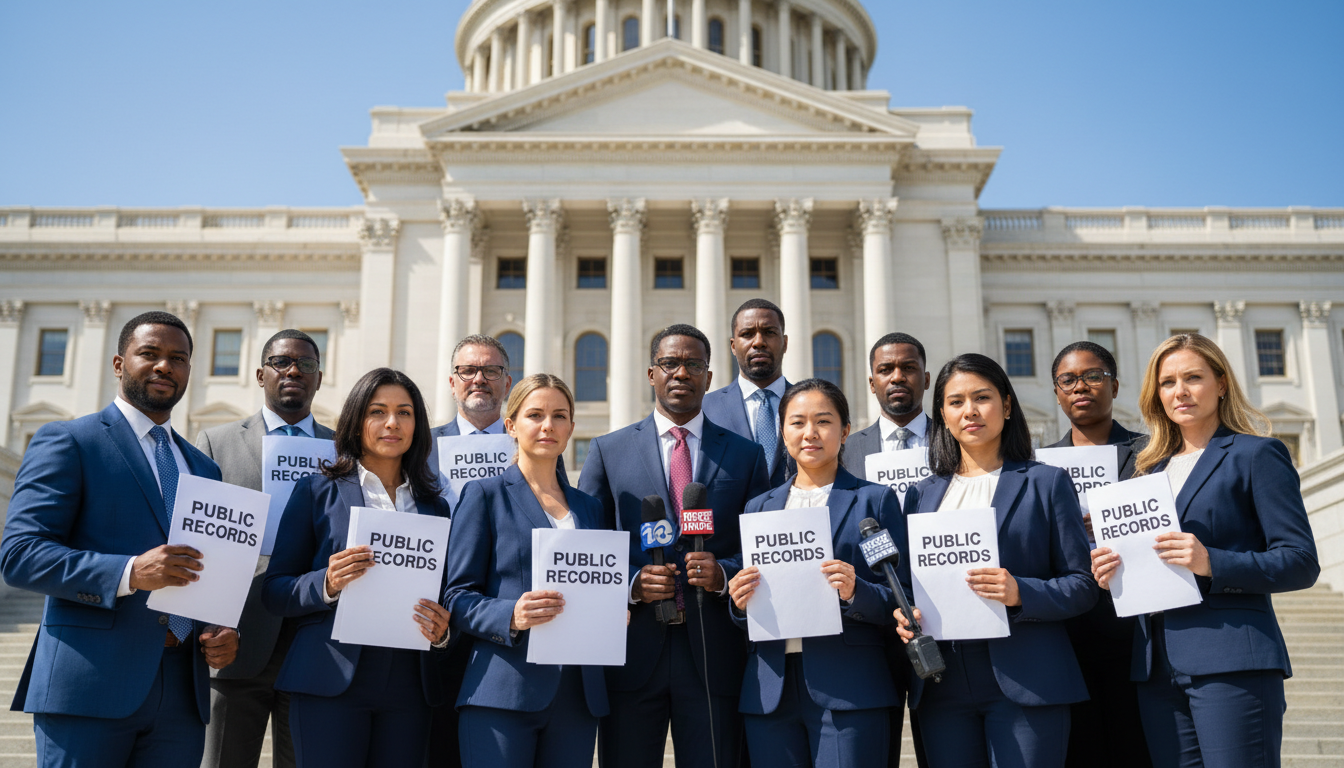
For decades, California jurisprudence relied on a distinction that essentially partitioned the Fifth Amendment. While individual, case by case exactions were subject to rigorous constitutional scrutiny, fees enacted through general legislation were often given a free pass. This became known as the legislative exception. Under this doctrine, California courts held that if a city council or board of supervisors passed a fee schedule applicable to a broad class of property owners, it was exempt from the standards of essential nexus and rough proportionality. This loophole created a significant hurdle for those challenging California impact fees Supreme Court Sheetz property rights were effectively sidelined by the mere fact that the fee was written into a general plan rather than being a one-off demand.
The Supreme Court’s unanimous decision in Sheetz v. County of El Dorado (601 U.S. 267) decisively ended this disparity. Writing for the Court, Justice Amy Coney Barrett clarified that the Takings Clause makes no distinction between legislative and administrative acts. The Constitution protects the individual from the government as a whole, not just specific branches of it. The ruling ensures that a legislative body cannot do collectively what an administrator is prohibited from doing individually: seize property interest without a clear, proportional justification.
This shift represents a fundamental change in how we address abusive permitting and zoning practices. By removing the legislative shield, the Court has forced local governments to defend their fee structures on the merits, rather than hiding behind their status as elected officials. For property owners and small businesses, this means that every dollar demanded as a condition for a permit is now subject to the same constitutional rigor. As a firm focused on strategic litigation against government agencies, CCDI views this as the closing of a dark chapter where local governments could bypass the Bill of Rights simply by following a specific procedural route.
Understanding the Nollan and Dolan Test for Development Impact Fees
To navigate the new legal landscape solidified by the Supreme Court, property owners must understand the dual requirements known as the Nollan and Dolan standards. These tests serve as the constitutional floor for all development conditions, ensuring that California impact fees Supreme Court Sheetz property rights remain protected from arbitrary government demands. The first hurdle for the government is the "essential nexus" established in Nollan v. California Coastal Commission. This standard requires a direct, logical connection between the identified public problem and the condition imposed on the permit. For a small business owner, this means the county cannot demand a fee for a new library as a condition for a parking lot expansion; the demand must actually relate to the impact of the project.
The second hurdle is "rough proportionality," established in Dolan v. City of Tigard. Even if a logical nexus exists, the government must demonstrate that the cost of the fee is roughly proportional to the specific impact of the development. A minor office renovation should not trigger a traffic impact fee calculated for a high density residential complex. The government must show its work, providing a factual basis to prove the property owner is not being forced to shoulder a disproportionate share of public costs.
For those currently facing abusive permitting and zoning practices, these standards are now mandatory for all fees, including those previously hidden behind legislative schedules. If a municipality demands a substantial sum for a commercial upgrade without providing a data driven justification for that specific project, they are likely in violation of the Fifth Amendment. Through strategic litigation against government agencies, CCDI ensures these constitutional metrics are strictly enforced. If a pending permit fee seems disconnected from your project's actual footprint, you should contact our legal team to evaluate the legality of the demand.
Impact on California Small Businesses and Economic Freedom
Excessive development impact fees function as a hidden tax on entrepreneurship and residential stability. For a small business owner, a twenty thousand dollar fee for a simple permit is not merely an administrative hurdle; it is capital diverted from payroll, inventory, or equipment. At CCDI, we believe that economic freedom thrives when voluntary cooperation is not stifled by arbitrary government levies. By treating these fees as a cost of doing business, municipalities have effectively created a pay to play system that disproportionately harms those without deep pockets.
Consider a local shop owner attempting to expand a parking lot to accommodate more customers. Under the old California regime, a county could impose a massive traffic impact fee based on a broad legislative schedule without ever proving the expansion would actually increase congestion. Similarly, property owners attempting to build an accessory dwelling unit (ADU) often face exactions that render the project financially impossible. These fees directly contribute to the state's housing crisis and stifle local commerce by making small scale improvements cost prohibitive.
The clarification of California impact fees Supreme Court Sheetz property rights provides these owners with a vital legal shield. Small businesses and residents no longer have to accept these demands as an unavoidable tax on growth. If a municipality cannot prove that a fee is both logically connected and financially proportional to a project, the demand is unconstitutional. CCDI is dedicated to ending these abusive permitting and zoning practices through strategic litigation against government agencies. If your business is being sidelined by unexplained exactions, you should contact our legal team to discuss how this new precedent applies to your specific permit.
How to Identify Government Overreach in Your Local Permitting Process

Recognizing the line between a legitimate fee and unconstitutional overreach requires a close examination of the permit demand. A primary red flag is the use of generic fee schedules that fail to account for the unique characteristics of your project. If a county assesses a standard traffic fee for a small commercial renovation using the same formula as a new large scale retail development, they are likely ignoring the constitutional requirement for project specific data. Other warning signs include flat rates that do not adjust for location or a refusal by officials to provide the underlying data used to calculate the demand.
Regarding the legal fallout, many property owners ask: what was the outcome of the Sheetz v. El Dorado County case? The Supreme Court vacated the lower court's decision and remanded the case; this means local governments must now prove their fees are constitutional under the Nollan and Dolan standards rather than relying on a legislative shield. The burden is now on the municipality to demonstrate a specific nexus and proportionality.
To preserve your rights, you should meticulously document every interaction with building officials. If a fee appears unjustified, pay it "under protest" pursuant to California Government Code Section 66020. This allows you to obtain your permit and move forward with your project while maintaining your right to challenge abusive permitting and zoning practices in court. When facing these demands, you can contact our legal team to evaluate if strategic litigation against government agencies is necessary to defend your California impact fees Supreme Court Sheetz property rights.
CCDI: Protecting Californians from Abusive Zoning and Permitting Practices
The Sheetz ruling reinforces the core mission of the California Civil Defense Institute: ensuring that government remains accountable to the people it serves. While our work frequently involves investigating the misuse of public funds and addressing police misconduct, we are equally committed to dismantling abusive permitting and zoning practices that stifle economic freedom. This Supreme Court victory validates our long standing position that constitutional protections are not subject to the whims of local legislative bodies or bureaucratic convenience.
CCDI operates on a fundamental philosophy: institutions exist to serve people, not the other way around. We support competent government that functions efficiently within the bounds of the law, but we act as a necessary watchdog when those bounds are ignored. The Sheetz decision provides a powerful tool for our strategic litigation against government agencies, allowing us to challenge fee structures that once seemed untouchable due to the legislative exception. By ensuring that California impact fees Supreme Court Sheetz property rights are strictly upheld, we help maintain the vital balance between public infrastructure needs and individual liberties. If you believe your municipality is using the permitting process to extract unconstitutional payments, you should contact our legal team to discuss how we can help hold your local government to the highest standards of administrative law.
The Future of California Property Rights after the Sheetz Decision
The Sheetz decision marks the start of a fundamental recalibration of power between Californians and the state. While the Supreme Court provided the legal framework, the remand of George Sheetz’s case to the California courts illustrates the practical struggle ahead. El Dorado County must now attempt to prove that its $23,420 fee was proportional to the specific impact of a single manufactured home; this is a high bar that many current fee schedules likely cannot meet. We anticipate a significant increase in litigation as property owners realize that generic impact fee schedules are no longer insulated from judicial review. Local governments face a critical choice. They can either voluntarily recalculate these tolls to reflect actual, project specific data or face a wave of constitutional challenges.
The long term stability of California impact fees Supreme Court Sheetz property rights depends on persistent enforcement. Some municipalities may attempt to bypass this ruling with boilerplate administrative justifications, yet CCDI is prepared to counter such tactics through strategic litigation against government agencies. Constitutional protections are not second class rights, and they must exist in practice, not just as theoretical concepts in a law book. By challenging abusive permitting and zoning practices, we ensure that the permit process remains a regulatory tool rather than an unauthorized revenue stream. If you are facing an unjustified exaction, contact our legal team to protect your project from government overreach.
The Sheetz decision fundamentally changes the landscape for property rights in California. It ensures that legislative impact fees are subject to the same constitutional standards as administrative ones, offering a vital defense against government overreach. However, understanding how these legal precedents apply to your specific situation can be difficult. If you want expert help navigating these evolving regulations, we encourage you to explore What We Do at CCDI. We are here to support property owners in securing their constitutional protections.