To file a California Public Records Act request, you must submit a written inquiry to the relevant government agency that clearly describes the specific records you are seeking. Agencies have ten days to respond to your request and determine if the documents are subject to public disclosure; they may also charge a fee for duplicating records.
Navigating the bureaucratic maze of government information often feels like an exercise in futility. For legal professionals and defense teams, the inability to access critical public data can stall proceedings or obscure vital evidence. While the California Public Records Act provides a statutory right to transparency, the practical reality involves overcoming administrative hurdles and strategic delays. This guide offers a comprehensive framework for mastering the request process. You will learn how to identify obligated agencies and draft precise inquiries that minimize pushback. We will analyze the mandatory ten-day response period, the complexities of common exemptions, and the financial implications of large data pulls. Finally, we provide actionable strategies for cases where agencies ignore or deny your lawful requests; this ensures you maintain a position of strength in your pursuit of information.
Understanding Your Right to Information under the California Public Records Act
Transparency is not merely a policy preference in California; it is a fundamental constitutional right. Article 1, Section 3 of the California Constitution explicitly states that the people have the right of access to information concerning the conduct of the people’s business. This mandate serves as the bedrock for government accountability, ensuring that the actions of public officials remain subject to citizen oversight and scrutiny.
The primary mechanism for exercising this right is the California Public Records Act (CPRA). While many are familiar with the federal Freedom of Information Act (FOIA), that statute applies only to federal agencies like the FBI or the EPA. To access records from California state and local entities, you must submit a California Public Records Act request. Practitioners and citizens should note that the CPRA underwent a significant recodification in 2023. The law moved from its long-standing home in Government Code Section 6250 to a new, more organized structure spanning Government Code sections 7920.000 through 7931.000. While the substance of the law remains largely unchanged, using the updated citations in your correspondence demonstrates a level of legal rigor that discourages agencies from providing dismissive or boilerplate responses.
At the California Civil Defense Institute, we view the CPRA as a vital tool designed to bridge the gap between theoretical rights and practical enforcement. Without transparency, civil liberties and economic freedoms can be quietly eroded by administrative overreach. By enforcing the California Public Records Act, we ensure that the sunlight necessary for a free society actually reaches the files of the agencies that govern our daily lives. This transparency is the essential first step in identifying misconduct and mobilizing against systemic government failure.
Identifying Which Government Agencies Must Comply
Understanding the scope of the CPRA is essential for effective government accountability. The law applies broadly to nearly every state and local entity in California. This includes every city, county, school district, and municipal corporation. It also encompasses special districts, such as local water boards, transportation authorities, and police departments.
For those challenging administrative overreach, this means you can target specific agencies to uncover misconduct. Property owners and small businesses can use a California Public Records Act request to obtain zoning and permitting logs, helping to identify discriminatory enforcement or abusive administrative practices. Similarly, under SB 1421 and SB 16, citizens can access records regarding police officer-involved shootings, use of force, or sustained findings of sexual assault and dishonesty.
However, the CPRA does not reach every branch of government. The California State Legislature and the state court system are not subject to the CPRA. Access to legislative records is governed by the Legislative Open Records Act, while judicial administrative records are generally accessible through the California Rules of Court, Rule 10.500. When enforcing the California Public Records Act, ensuring your request is directed at a qualifying executive or local agency prevents unnecessary delays and jurisdictional rejections.
How to Draft a Precise California Public Records Act Request

Once you identify the correct agency, the success of your inquiry depends on the precision of your language. A vague or expansive California Public Records Act request invites administrative foot-dragging. Agencies often use terms like "overly broad" or "unduly burdensome" as justifications to delay production or deny access entirely. To mitigate this, describe the records with granular detail. Instead of requesting "all emails about zoning," specify "all email communications between the Planning Director and the City Manager containing the keyword 'Main Street Development' sent between January 1, 2023, and June 30, 2023."
Specificity should extend to the specific formats and types of records sought. Explicitly list meeting minutes, text messages on public devices, draft reports, or internal memos. While the CPRA permits oral requests, we strongly advise submitting every request in writing, preferably via email or certified mail. A written record establishes an indisputable timeline and a paper trail essential for enforcing the California Public Records Act if the agency fails to comply. This documentation is the cornerstone of government accountability in a legal context, providing the evidence needed for judicial review if the matter escalates.
It is also strategic to remind the agency of its statutory obligations within the body of your request. Under Government Code section 7922.600, agencies have an affirmative duty to assist the public in making a focused and effective request. If an agency claims your request is too vague, they are legally required to help you identify records and suggest ways to overcome any practical obstacles. When drafting, you should proactively invite this collaboration. State clearly that if the agency finds the request unclear, you expect them to fulfill their duty to assist by providing suggestions on how to better target the information you are seeking. This proactive stance puts the agency on notice that you are aware of your rights and their legal burdens.
The 10 Day Response Rule and What to Expect
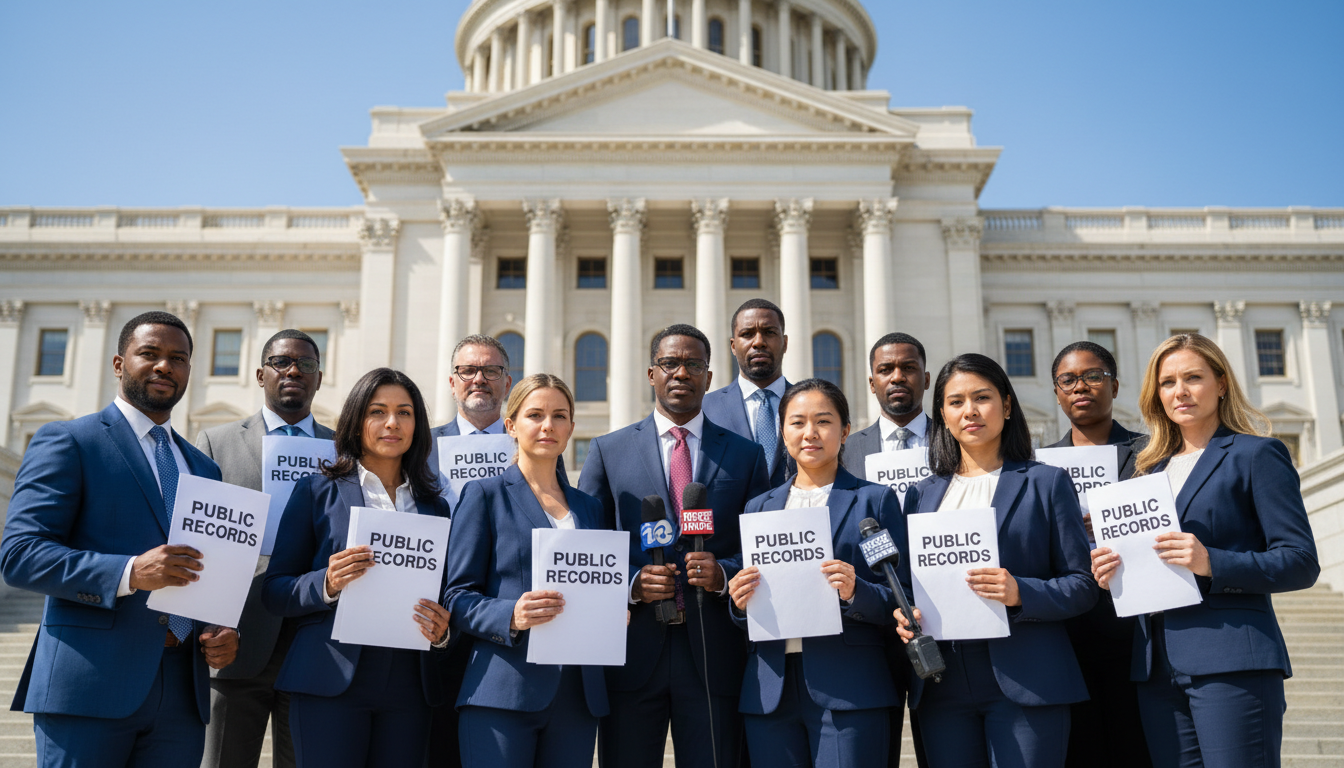
Once your California Public Records Act request is received, the statutory clock begins immediately. Under Government Code section 7922.535, the agency has exactly 10 days to issue a determination. This initial response is not a suggestion; it is a legal mandate to notify you whether the agency possesses disclosable records and to state the specific reasons for any intended withholdings. If the agency faces "unusual circumstances," such as the need to search field offices or compile a voluminous amount of data, they may invoke a one time extension of up to 14 additional days. To do so, the agency must provide a written notice stating the reasons for the delay and the date by which a determination will be dispatched.
Critical to government accountability is the distinction between a "determination" and the actual "production" of records. The 10 day window applies to the agency’s decision, not necessarily the physical delivery of documents. However, the law requires that records be made available "promptly." Agencies frequently attempt to use the redaction process as a pretext for indefinite delays. When enforcing the California Public Records Act, it is vital to insist that the agency provide a date certain for production. Any attempt to leave the production date open ended should be viewed as a red flag for administrative foot-dragging.
Common Exemptions and How to Navigate Redactions
Agencies rarely hand over sensitive files without testing the boundaries of legal exemptions. When you file a California Public Records Act request, you will likely encounter denials based on specific statutory carve-outs. The most common include personnel files that implicate individual privacy, records of active law enforcement investigations, and communications protected by attorney-client privilege. While these protections have legitimate applications, agencies often interpret them with excessive breadth to shield themselves from government accountability.
The most frequent tool for administrative overreach is the "Catch-All" exemption, now codified in Government Code section 7922.000. This provision allows an agency to withhold a record if they can demonstrate that the public interest served by not disclosing the record clearly outweighs the public interest served by disclosure. Because this is a subjective balancing test, it is the primary mechanism used to hide inconvenient data. Agencies might claim that releasing a specific log would "chill internal deliberation," even when the data is purely factual and should be public.
You must remember that an exemption for one part of a record does not justify the withholding of the entire document. Under Government Code section 7922.500, agencies have a mandatory duty to redact. They must provide any "reasonably segregable" portion of a record after deleting the specific portions that are exempt by law. If an agency refuses to provide a comprehensive report because one page contains a legal opinion, they are in breach of their duties. Enforcing the California Public Records Act often involves litigation specifically to challenge these blanket denials, ensuring that transparency remains the rule and exemptions are strictly, narrowly applied.
Costs Associated with Public Records Requests
Navigating legal exemptions often leads to a final administrative hurdle: the invoice. Under the CPRA, public agencies are strictly limited in what they can charge for a California Public Records Act request. They may only recover the direct cost of duplication, which typically translates to a nominal fee, such as 10 cents per page for paper copies, or the actual cost of physical storage media like a USB drive.
Crucially, an agency cannot bill you for the staff time required to search for documents, review files, or perform the redactions discussed in the previous section. For digital records, Government Code section 7922.570 requires agencies to provide documents in their native electronic format. This ensures that small businesses and property owners can access large datasets at little to no cost, preventing the government from using high fees as a financial barrier to government accountability. Keeping these costs low is a vital part of enforcing the California Public Records Act, ensuring that transparency remains accessible to every citizen regardless of their budget.
What to Do if Your Request Is Denied or Ignored

When a government entity ignores your correspondence or issues a final denial based on a flawed legal interpretation, the administrative phase of your inquiry has ended. The CPRA is a self-executing statute, which means there is no state ombudsman or oversight board with the authority to compel an agency to release records. The only mechanism for relief is a petition for writ of mandate filed in the Superior Court. This legal reality places the burden of enforcing the California Public Records Act directly on the requester, turning transparency into a matter of judicial intervention.
While the prospect of litigation may seem daunting for an individual property owner or small business, the law contains a powerful equalizer. Under Government Code section 7923.115, the court is mandated to award court costs and reasonable attorney’s fees to a plaintiff who prevails in a CPRA lawsuit. This mandatory fee shifting provision is a critical pillar of government accountability, ensuring that the cost of legal representation does not become a barrier to civil liberty. If the agency is found to have unlawfully withheld even a portion of the records, they must pay for the legal talent used to hold them accountable.
The California Civil Defense Institute specializes in navigating these conflicts when government power begins to infringe upon individual rights. We help mobilize support for citizens who have hit a bureaucratic brick wall after filing a California Public Records Act request. By pursuing strategic litigation, we do more than just secure a specific document; we set legal precedents that discourage future administrative overreach. When an agency realizes that their foot-dragging will lead to a court order and a bill for attorney's fees, the incentive structure for transparency changes in favor of the citizen.